

Where your money goes
BSRA supports researchers asking one of medicine’s biggest questions: what happens inside our bodies as we age – and how might that knowledge help us stay healthier for longer?
Projects funded in 2026 span dementia, cardiovascular disease, pneumonia, menopause, inflammation and circadian rhythms, alongside work on the immune system, senescent cells and muscle. Some researchers study people or human cells; others use organisms such as worms, fish and mice.
Most of our grants go to talented researchers at the beginning of their careers, when small awards can make a substantial difference. They allow researchers to present at conferences, develop new partnerships and remain in ageing research at a time of fierce competition.
Find recent annual reports with full details on the Our Impact page.
Your support helps us fund the next generation of researchers.
Meet some of them here:
-
Read their story

Dr Maria Kyriazi
University of Oxford
ASM Travel Grant, 2026
Dr Maria Kyriazi
I was truly grateful to receive a BSRA Travel Grant Award to attend and present at the 75th Annual Scientific Meeting of the BSRA at Keble College, Oxford, and even more thrilled to be awarded the Korenchevsky Prize for my oral presentation as an early career researcher. This was my first BSRA conference, and I thoroughly enjoyed the experience. Over those three days, the meeting brought together brilliant researchers from across the globe working on the biology of ageing in a very warm and welcoming setting. As an early career researcher, I found the meeting especially valuable. Through a combination of short talks and keynote speeches, I heard from principal researchers whose work I have followed for years and discovered many others doing inspiring and important work in the field. At the same time, early career researchers were also given the platform to present new findings and ideas, in a room full of experts creating a very welcoming environment and a sense of exchange across different career stages.
During the conference, I had the opportunity to share my PhD work on the role of autophagy in osteoarthritis. My research aims to understand why older adults are prone to developing osteoarthritis, a disease affecting 1 in 3 people after the age of 65. I had the pleasure and honour of presenting some of my findings in front of pioneers in the field and discuss my work which was really rewarding. Beyond my own talk, it was a great opportunity to see how broad ageing research is and to understand where my own work fits within that bigger picture. Equally valuable were the people and the conversations throughout the conference. I met some wonderful researchers from academia and industry and left with new connections that I hope will continue and potentially even grow into future collaborations. It was motivating to meet peers working across so many areas of ageing research, to share experiences, and to feel part of a supportive community that I will continue to be part of as my career develops. Ageing research has transformed enormously over the last years and it is a really exciting time to be in the field, with BSRA certainly being one of the key societies promoting the advancement of ageing research as well as bringing together the community.
Receiving the Korenchevsky Prize was an unexpected and very special highlight of an already memorable meeting. It will allow me to present my work at the American Aging Association Annual Meeting in the US next year, and I look forward to connecting with even more ageing researchers there. I am extremely grateful to the BSRA for the Travel Grant that supported my attendance, funded by the BBSRC, and for the recognition of my work through the Korenchevsky Prize. I would sincerely like to thank the BSRA committee, the Trustees, and the organisers for such a welcoming meeting, and I really look forward to the next one!
Photo credit: ©️NDORMS/David Fisher
-
Read their story

Joanna Ward
University of Lincoln
Small Research Grant, 2025
Joanna Ward
As we get older, our chances of having a heart attack or stroke increase. One reason for this is that our bodies can develop ongoing low-level inflammation, and our cells, including the cells that help protect us from illness, can become less effective with age. While current treatments have helped many people with heart and circulatory diseases live longer and healthier lives, some people remain at high risk of future health problems.Our research will explore whether people with cardiovascular disease have higher levels of inflammation and age-related changes in their immune cells than healthy people, and whether these changes become greater as people get older. We will also study blood samples from people taking part in a clinical trial to understand how new treatments might help lower this risk.I am grateful to the BSRA and DoNotAge.org for supporting this work. By learning more about what causes cardiovascular disease and why some people remain at risk despite treatment, we hope to help develop better therapies to prevent future heart attacks, strokes, and other complications. -
Read their story

Dr Marie Korzepa
Birmingham University
Conference Grant, 2025
Dr Marie Korzepa
The travel grant for BSRA helped to support my travel to the American Aging Association (AGE) 52nd Annual Meeting, where I presented at my first international conference. I presented immunofluorescence microscopy-based work, comparing skeletal muscle cross sections in young and old humans. The award allowed me the unique opportunity to exchange ideas and talk to other people working on other models of ageing and make collaborations outside of the UK.
-
Read their story
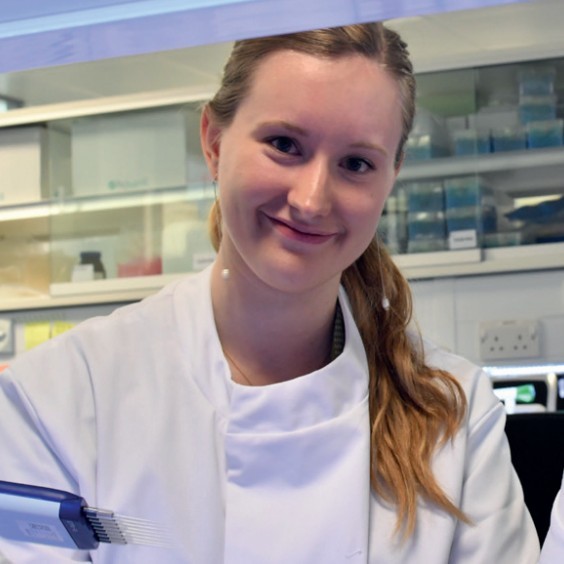
Dr Laura Sinclair
Exeter University
ASM Travel Grant, 2024
Dr Laura Sinclair
I was delighted to receive a BSRA Travel Grant to attend the annual meeting in Manchester in September 2025. Having attended the conference the previous year, I was very pleased to obtain funding to return. The grant enabled me to stay involved in this close and supportive research community. This experience also motivated me to give back, and I have recently become a Trustee of the BSRA. In this role, I aim to support the interests of early career members.
At the conference, I presented preliminary findings from the Phyto Ageing study. In the study, participants were given a commercially available, plant-derived dietary supplement. We then investigated its effects on ageing in the hands. We hope to finalise and publish our results this year (watch this space!). I particularly enjoyed discussing our work with members of the public as well as BSRA members.
The meeting provided a valuable opportunity to engage with experts in my favourite area of ageing research, cellular senescence. Because I completed my PhD during the Covid-19 pandemic, I have previously had limited opportunities to attend conferences. Being able to participate in person was therefore particularly meaningful. I met many interesting individuals, including several attendees from outside academia. These interactions offered interesting perspectives on ageing research.
I also found it fascinating to learn about the wide range of ongoing research in ageing. The conference strengthened my confidence in my current grant proposals and inspired new ideas for future projects. It also helped establish potential collaborative connections. Sharing my work and networking with others is especially important at this stage of my career. The BSRA’s annual meeting provides a unique opportunity to hear about new research happening in the ageing sphere.
-
Read their story
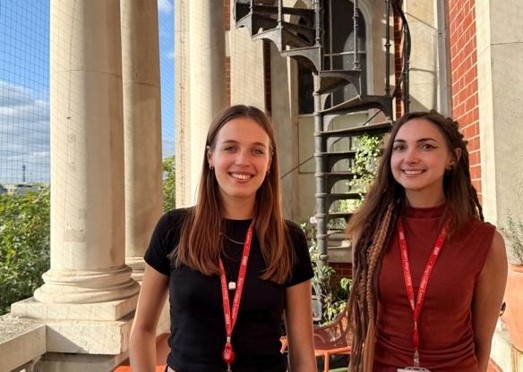
Phoebe Bedford
University of Oxford
Summer Studentship 2024
Phoebe Bedford
Having just completed my second year studying Biology at Oxford, I was lucky enough to be awarded a BSRA Summer Studentship to gain six weeks of hands-on experience in ageing research. I worked with Dr. Chiara Herzog at Twins UK (part of King’s College London) to carry out computational analyses of epigenetic data. This experience was a fantastic insight into the world of ageing research; I gained new skills, met a range of researchers, and was inspired to continue pursuing work in this field.
The aim of my project was to investigate the potential for saliva samples to be used to characterise the epigenome (instead of tissues like blood, which are more commonly used). This involved looking at the ability of the saliva data to reflect epigenetic features associated with smoking, breast cancer and ageing, using previously developed scores for these traits. The epigenetic age measured in saliva samples showed a strong correlation with chronological age – revealing that saliva samples show promise for measuring epigenetic age in a meaningful way.
During the studentship, I spent a significant amount of time working with R Studio, learning how to make the most of the computational tools and techniques used to carry out epigenetic analyses. I also met researchers working in a range of fields related to human health, ageing and genetics, gaining valuable insight into the world of research. At the end of the studentship, I presented my work to a group of colleagues, developing my public speaking and presentation skills.
Overall, this studentship was an excellent opportunity, allowing me to gain skills from bioinformatic analysis to public speaking, and I loved being able to make a contribution to ageing research. I’d like to thank Dr. Herzog for supporting me through the project, and the BSRA for providing the funding which enabled the studentship to go ahead.